
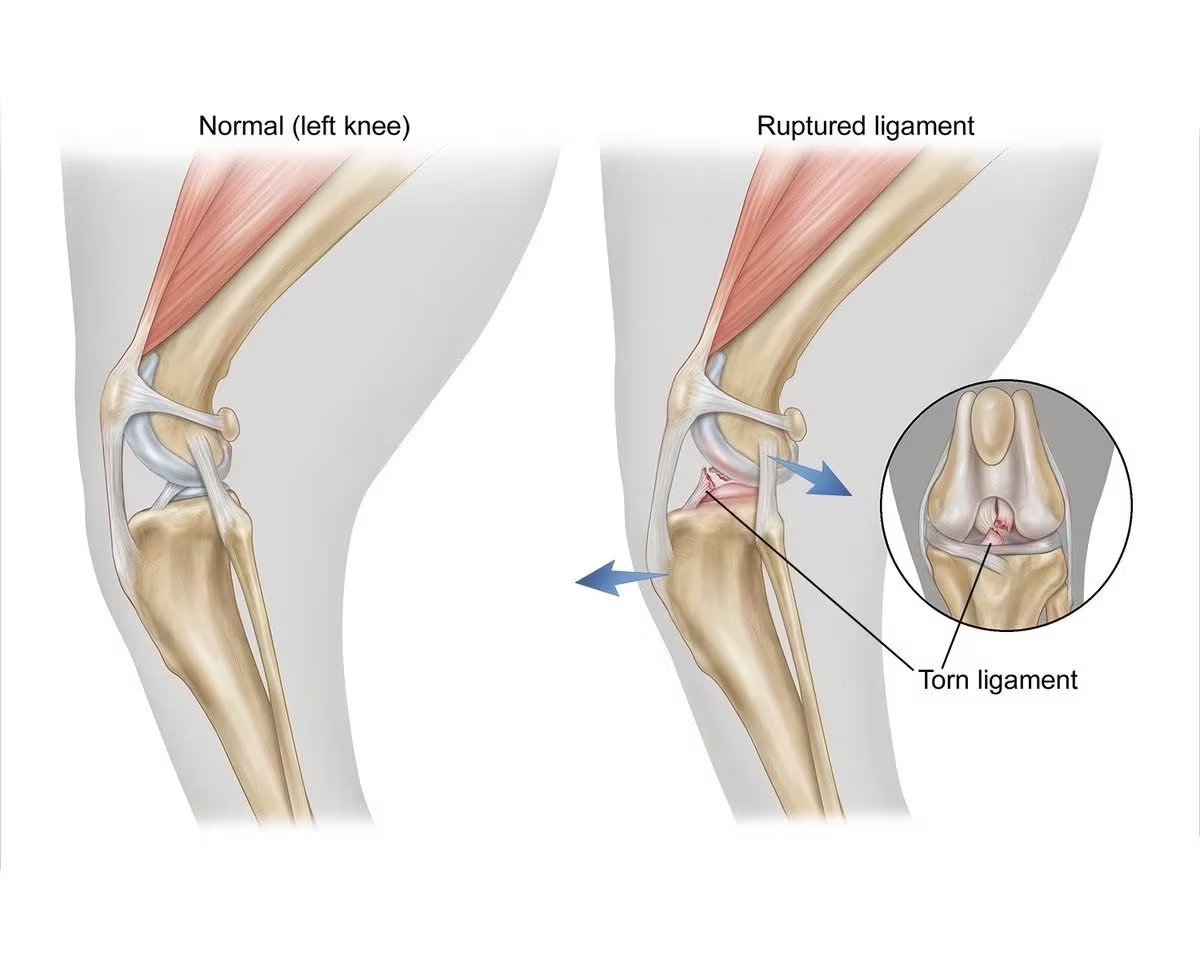
Cruciate ligament disease is a common cause of hind-leg lameness in dogs. It can develop gradually, or occur suddenly following a trauma, slip or fall.
Whilst clinical canine massage therapy does not repair a damage cruciate ligament, it can provide valuable support alongside veterinary treatment and rehabilitation. As a therapist, I can work with dogs at all stages of their recover to help maintain comfort, support muscular function, and address any areas of compensation.
What is cruciate ligament disease?
The cranial cruciate ligament (CCL) is one of the important ligaments within a dog’s stifle (or knee). It helps to stabilise the joint during movement by limiting excessive rotation and prevents the tibia from sliding too far forwards, in relation to the femur. When the ligament becomes damaged or ruptures, the stifle can become painful and unstable.
There are four grades of ligament sprain:
Grade 1: A minimal tear (sprain) of a ligament with a degree of internal haemorrhage
Grade 2: A partial tear of the ligament
Grade 3: Complete rupture of the ligament
Grade 4: Ligament tears and takes a small piece of bone
A Grade 1 sprain will improve with rest, lead walks and a review of how your dog lives so that no future or further damage is done. This can take approximately 2 – 3 months to heal and is most vulnerable from becoming a Grade 2 sprain with a slight twist.
A Grade 3 or Grade 4 sprain will require surgery and can take anywhere from 3 – 6 months to recover from.
What causes it?
There are two main ways that cruciate ligament disease can develop:
- Degeneration: The fibres of the ligament gradually weaken over time, rather like a rope that starts fraying. Eventually, a normal day-to-day activity may be enough to cause a partial or complete rupture.
- Trauma: A sudden trauma to the leg or an awkward landing / fall may overload the ligament and cause a tear.
Several other factors may increase a dog’s risk of cruciate ligament disease such as:
- Breed and genetic predisposition. Higher risk breeds include Labradors, Rottweilers, Newfoundlands, Boxers and West Highland White Terriers.
- Excess body weight, which puts additional strain on the joints.
- Poor muscle condition.
- The shape and alignment of the dog’s stifle.
- Existing joint inflammation or arthritis.
- Activities of daily living such as jumping, ball chasing, running on slippery floors, sharp changes of direction.
A dog that has experienced cruciate ligament disease in one stifle may also be at a higher risk of developing it in the other leg, so monitoring is important.
Symptoms
Possible symptoms include:
- Limping or hopping on one hind leg.
- Reduced weight bearing on the affected leg.
- Difficulty getting up, lying down or using stairs.
- Stiffness after rest or exercise.
- Swelling around the stifle joint.
- Reluctance to run, play, jump or go for walks.
- Sitting with the leg held out to one side.
- An altered gait or reduced stride length.
- Licking the knee or showing sensitivity when handled.
Treatment
There are normally two routes to treatment of cruciate ligament disease, which depend on a variety of factors that your veterinarian will discuss and take into account, such as age, size, lifestyle, overall health and the severity of the disease progression.
Conservative Management
Some dogs may not require surgery, however a combination of pain relief, controlled exercise, rest, weight management and rehabilitation would be used. The aim is to reduce strain on the joint while improving strength and function.
Surgery
Surgery may be recommended where the stifle is significantly unstable, the ligament has completely ruptured, or conservative treatment is unlikely to provide a good outcome.
Procedures, such as TPLO, alter the mechanics of the stifle so that it can function more effectively without relying on the damaged ligament in the same way.
With surgery comes post-operative rehabilitation. This includes controlled exercises and working with a physiotherapist so that a gradual return to life is completed. Manual lymphatic drainage can be performed post-surgery and can help with the swelling after TPLO surgery.
How can massage help?
Massage is a supportive and complementary therapy. It cannot reattach or repair the cruciate ligament, and does not replace veterinary assessment or surgery where required.
However, a cruciate injury affects more than the ligament itself. When a dog has a painful or unstable stifle, they may alter the way that they stand and move. They may put less weight through the affected limb, and compensate through the other legs.
Massage can therefore help with:
- Reducing swelling
- Helping areas of compensation on the unaffected leg
- Aiding post-surgery rehabilitation
- Reducing inflammation
- Promoting mobility within all legs
- Improving comfort levels
- Assisting with pain management
- Helping to identify any changes in muscle tone or sensitivity that can be fed back to the multi-modal team of veterinarians, physiotherapists and hydrotherapists
The focus of treatment is never solely on the impacted stifle, as clinical canine massage therapists treat the whole body. By implementing canine massage as part of the supportive care following your dog’s diagnosis can help address the muscular effects of altered movement, and provide a calm and comfortable treatment experience.
Image credit Howard County Animal Hospital