
Clinical canine massage is a non-invasive therapy for dogs. This unique and effective remedial massage works by releasing tight and sore muscles, removing debilitating trigger points that cause referred pain, and helps rehabilitate scar tissue.
With results usually seen in one to three sessions, massage can benefit your dog by improving their mobility, posture and overall comfort.
As a Canine Massage Guild member, I am trained to use four disciplines of massage, encompassing over 50 techniques; myofascial release (direct and indirect), sports massage, deep tissue massage and Swedish massage.
Dogs benefit from massage in the same way that humans do. It is highly effective at easing muscular discomfort and addressing soft tissue injuries. Other benefits for massage include:
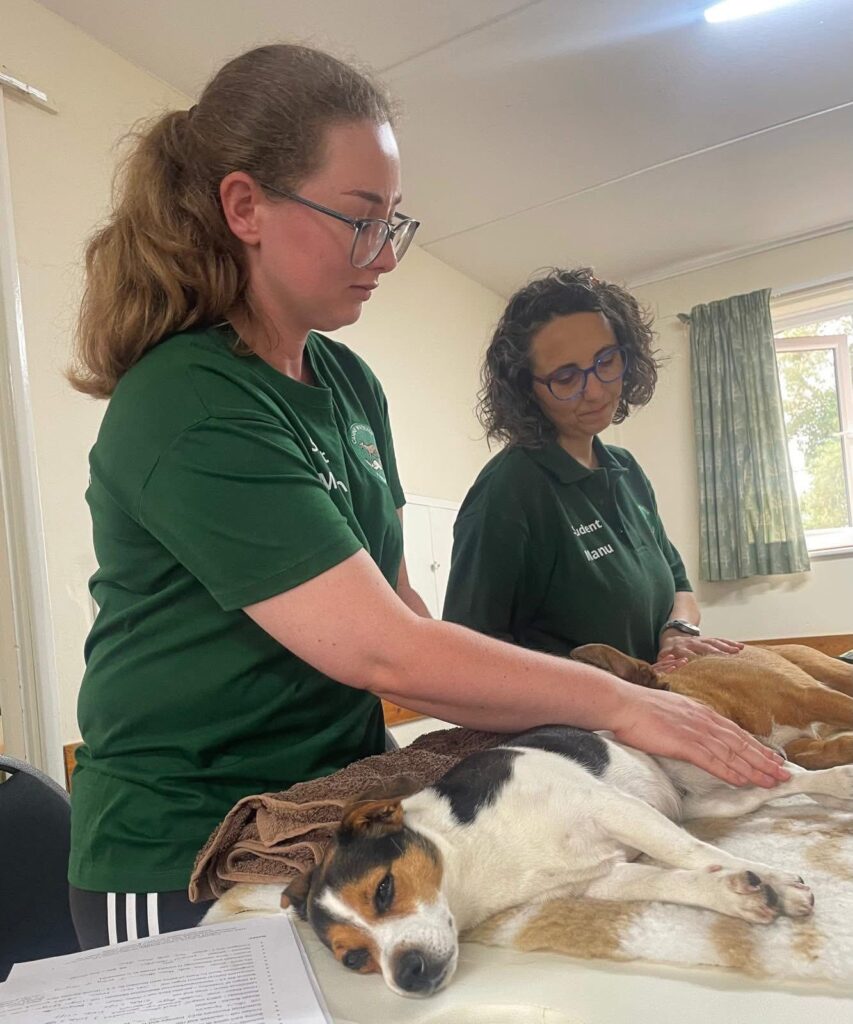
Pet dogs can have muscular injuries. Repetitive micro trauma to the muscle is commonly caused by seemingly harmless activities of daily living such as:
Any of these activities cause repetitive strain injury. This causes the formation of fibrous scar tissue commonly found in the spinal area of the dog. When these muscles become traumatised, they will pull the bone out of place, and tension on the tendons become extreme. Secondary muscle tension then surrounds the area until a habitual cycle forms as the adjacent fibres work more to compensate for the dysfunction.
This muscular pain can be subtle but some signs to look out for are:
Massage can help your dog by finding and treating areas of soreness, trigger points, protecting muscle splinting and overcompensation, as well as assisting with the healing of muscular strains, so that their overall wellbeing can be improved.
It never seems that long ago that there was a new puppy hurtling around, full of energy, and the next we have an older dog, happily pottering around the garden or sleeping soundly in a sunny patch. Why does the time have to go so quickly?
Different breeds age at different rates, but as dogs age, there are changes to their body, senses and physical system. These can be slowing down, becoming stiff, reluctant to walk, loss of muscle mass, development of osteoarthritis, twitching muscles, shaking limbs and generally a loss of their “bounce”.
Massage can make a dramatic difference to older dogs by:
Within any sport of activity, we ask a lot on our dog’s bodies, so it is no wonder that muscular issues can impact a dog’s training or competition. You may recognise some changes in performance such as:
Agility Dogs
Hoopers Dogs
Obedience Dogs
Canicross Dogs
Show Dogs
There are very few dog owners who know and understand posture and gait as well as a show dog owner. Canine massage therapy provides a working knowledge and understanding of what needs to happen to produce efficient and natural movement. Muscular issues may present themselves in show dogs by:
Getting your rescue dog checked over with canine massage therapy can be invaluable for any rescue dog and their owner. It can highlight old injuries to discover their past, and explain why they may lack confidence around people.
Not knowing what happened to your dog previously can lead to guessing why they are exhibiting a certain behaviour. Canine massage therapy can work alongside your dog’s behaviourist / trainer to help understand areas of the body that may be painful and why they are behaving in a certain way.
It can also be beneficial for:
Canine massage therapy can also be particularly helpful for ex-racing greyhounds who may have scar tissue, repetitive strain injuries or acute trauma from their time on the track or in training.